Sunday Night Dread and What It Actually Signals
The Sunday evening drop is treated as a universal joke, which is a convenient way to avoid asking what it is actually telling you — because a mild flicker and a genuine weekly dread are two very different signals from two very different situations. Here is why it is information, how to read it, and what to do.

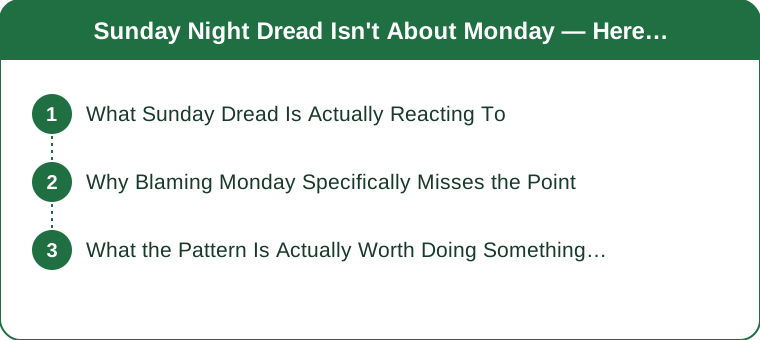
Why the Dread Is Information
A signal, not a joke: the the-it-is-treated-as-a-joke (the the cultural framing dismissing it as universal from the sunday-scaries logic — the treated-as-a-joke), the the-mild-and-severe-are-different-signals (the a flicker and a real dread indicating different things from the sunday-scaries logic — the mild-vs-severe), the the-it-points-at-something-specific (the the dread usually attaching to something identifiable from the burnout-vs-tired logic — the points-at-something), the the-ignoring-it-lets-it-grow (the ignoring the signal allowing it to escalate from the prevent-burnout logic — the ignoring-lets-it-grow), the the-it-can-precede-burnout (the sustained dread often preceding burnout from the burnout-recovery logic — the precedes-burnout), and the reframe (the Sunday dread as information rather than a joke — with a mild flicker and a genuine weekly dread signalling very different situations).

How to Read It
Locating the source: the the-name-what-specifically (the identifying what specifically you are dreading from the energy-audit logic — the name-it-specifically), the the-is-it-a-task-or-a-person (the distinguishing a task, a person, or the whole situation from the boundaries logic — the task-or-person), the the-is-it-monday-or-the-whole-week (the whether it is one meeting or the entire week from the energy-audit logic — the monday-or-the-week), the the-has-it-got-worse-over-time (the whether the intensity is increasing from the burnout-vs-tired logic — the getting-worse), the the-is-it-workload-or-boundaries (the whether it is volume or lack of boundaries from the boundaries logic — the workload-or-boundaries), the the-an-energy-audit-reveals-it (the an energy audit surfacing what drains you from the energy-audit logic — the energy-audit), the the-note-the-physical-symptoms (the noticing physical symptoms alongside it from the burnout-vs-tired logic — the physical-symptoms), and the the-distinguish-tired-from-burnt-out (the separating ordinary tiredness from burnout from the burnout-vs-tired logic — the tired-vs-burnt-out).
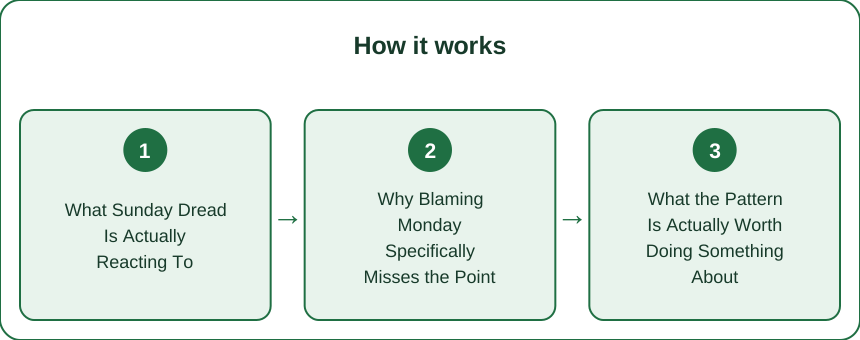
The Acting-On-It Notes
Responding usefully: the the-address-the-specific-thing (the addressing the identified source rather than the mood from the energy-audit logic — the address-the-specific), the the-set-a-boundary-where-it-is-boundaries (the setting a concrete boundary where that is the issue from the boundaries logic — the set-a-boundary), the the-use-a-script-to-say-no (the having prepared language to decline from the saying-no logic — the saying-no-scripts), the the-micro-recovery-through-the-week (the building small recovery into the working week from the micro-recovery logic — the micro-recovery), the the-protect-sunday-evening-itself (the protecting the evening rather than filling it with dread from the sunday-scaries logic — the protect-the-evening), the the-escalate-if-it-does-not-shift (the escalating to a conversation or support if it persists from the burnout-recovery logic — the escalate-if-persistent), the the-seek-support-for-sustained-dread (the seeking professional support where dread is sustained from the burnout-recovery logic — the seek-support), and the frame (the Sunday dread as a signal to be named and located — a task, a person, a workload or a boundary — then acted on specifically rather than endured weekly. Name what specifically you are dreading, distinguish tired from burnt out, address the specific source, and seek support if it persists.)
The Sunday evening drop is treated as a universal joke, which is a convenient way to avoid asking what it is actually telling you — because a mild flicker and a genuine weekly dread are two very different signals. The dread is information because it is treated as a joke, mild and severe are different signals, it points at something specific, ignoring it lets it grow, and it can precede burnout. Read it by naming what specifically, asking whether it is a task or a person, Monday or the whole week, whether it has got worse, whether it is workload or boundaries, running an energy audit, noting physical symptoms, and distinguishing tired from burnt out. Act by addressing the specific thing, setting a boundary, using a script to say no, building micro-recovery through the week, protecting Sunday evening itself, escalating if it does not shift, and seeking support for sustained dread.
Keep Reading
This article is for general informational purposes only and is not medical advice. Always consult a qualified health professional for guidance specific to you.