The Energy Audit: One Week of Finding Your Leaks
Chronic tiredness gets treated with generic advice — sleep more, stress less — while the actual leaks hide in personal patterns no listicle can see. The energy audit: one week of honest logging, the pattern reads that surprise everyone and the small fixes that return the most.

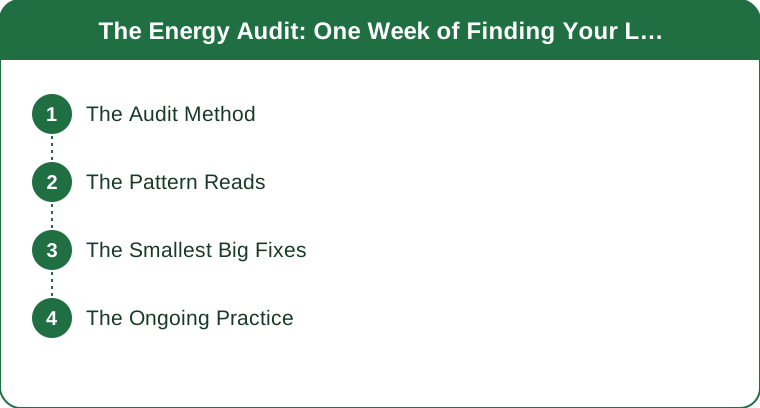
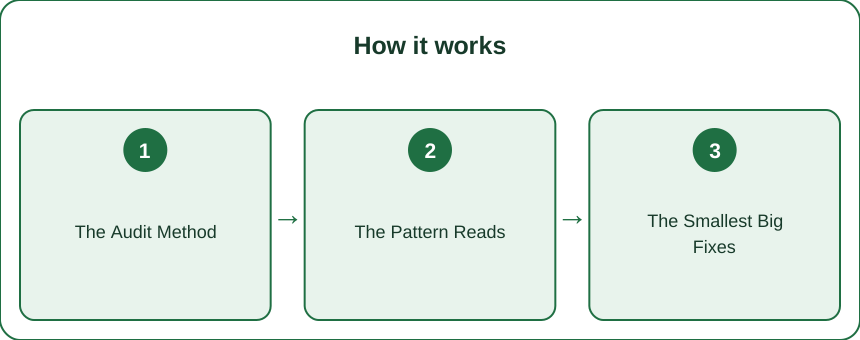
The Audit Method
The one-week protocol: the three-times-daily check-in (morning, mid-afternoon, evening — rate energy 1-10 and note what the last few hours held; ninety seconds per entry, phone note or paper), the drain-and-gain columns (each entry tags what pulled energy — the meeting type, the skipped lunch, the scroll session — and what added it — the walk, the conversation, the finished task), and the no-fixing-yet rule (week one only observes — the audit’s power is honest data, and pre-judging contaminates it; you’re a researcher this week, not a patient).
The Pattern Reads
What audits reliably reveal: the time-of-day truth (most people discover a real energy architecture — the sharp morning, the 2pm trough, the evening rebound — and realize their schedule fights it; the hardest task scheduled at your worst hour is a leak, not a character flaw), the drain surprises (the audit’s classic finding: specific MEETINGS and specific PEOPLE drain more than actual work does — and the phone sessions logged as ‘rest’ rate as drains almost universally), the gain surprises (movement, sunlight and completed small tasks rate as gains far above their reputation — the walking-meeting crowd discovers why), and the fake-rest discovery (the evening ‘relaxation’ that scores as a drain — scrolling and background-TV rest often returns nothing; the audit distinguishes restorative rest from time-filling rest ruthlessly).

The Smallest Big Fixes
The high-return interventions: schedule-to-architecture (move the deep work to your logged peak and the admin to the trough — same tasks, same hours, less cost; the free fix with the biggest audit-verified return), the drain-buffering (the recovery gap after the logged heavy meetings — ten minutes of walk-or-breath between drains stops the stacking), the fake-rest swap (replace the lowest-scoring ‘rest’ activity with the highest-scoring gain — usually: one evening scroll session becomes one walk or one chapter; a single swap, measurable within days), and the energy-first calendar defense (the audit gives you data to decline with — ‘that slot is my deep-work peak’ is a boundary with receipts).
The Ongoing Practice
After the week: the monthly spot-audit (two days of logging keeps the data fresh — patterns drift with seasons and roles), the burnout-early-warning use (a falling baseline across audits is the smoke alarm — the overtraining-signs logic applied to whole lives; sustained decline despite fixes is the see-someone signal, and the doctor-and-therapist tier exists for exactly that), and the compassion clause (the audit reveals limits, not laziness — tiredness with identifiable leaks is an engineering problem, and engineering problems have fixes). One week of honest data beats a year of generic advice — the leaks were always personal.
Log three times daily, tag drains and gains, schedule to your architecture, swap the fake rest. The energy audit finds the leaks generic advice can’t — one week of data, years of returns.
Keep Reading
This article is for general informational purposes only and is not medical advice. Always consult a qualified health professional for guidance specific to you.