Productive Burnout: When Staying Busy Is Actually the Warning Sign, Not the Cure
Staying constantly busy feels like the opposite of burning out, which is exactly what makes productive burnout so easy to miss — the frantic task-switching and long to-do lists can be masking exhaustion rather than preventing it, right up until something finally breaks. Here is why staying busy can worsen burnout instead of protecting against it, the specific signs of this particular version, and how to actually rest instead of just switching tasks.

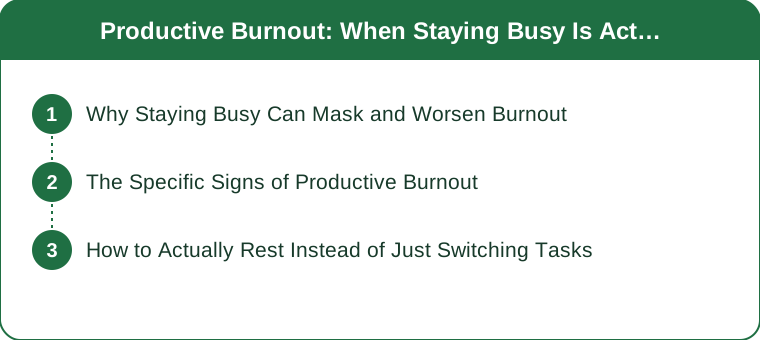
Why Staying Busy Can Mask and Worsen Burnout
The hidden mechanism: the the-busyness-provides-a-dopamine-substitute-for-rest (the checking off tasks providing a quick dopamine hit that temporarily masks underlying exhaustion, similar to how distraction masks pain — the task-completion-feels-like-relief-but-isn’t-recovery), the the-avoidance-of-stillness (the constant activity sometimes functioning as avoidance of the discomfort that shows up the moment things go quiet — the busyness-can-be-running-from-something-not-toward-something), the the-productivity-culture-rewards-the-wrong-signal (the being praised for output specifically reinforcing the busy-equals-fine assumption even as exhaustion builds underneath from the sunday-night-dread-and-what-it-signals-guide logic — the external-praise-for-output-hides-the-internal-state), the the-task-switching-isn’t-actual-rest (the switching from one demanding task to another feeling like a break but providing none of the actual physiological recovery rest requires — the switching-tasks-isn’t-the-same-as-recovering), the the-burnout-builds-silently-underneath-visible-output (the cumulative exhaustion accumulating even while visible output stays high, until a threshold is crossed — the output-can-stay-high-right-up-until-it-suddenly-can’t), and the reframe (the productive-burnout pattern as staying busy specifically because stopping feels harder than continuing — which means high output is not evidence against burnout, sometimes it’s evidence of it)).

The Specific Signs of Productive Burnout
What to actually watch for: the the-inability-to-sit-with-unstructured-time (the genuine discomfort or restlessness during any unscheduled stretch of time, immediately reaching for a task to fill it — the discomfort-with-stillness-is-a-key-tell), the the-high-output-with-no-sense-of-accomplishment (the completing a large volume of tasks while feeling no corresponding sense of satisfaction or progress — the volume-without-satisfaction-is-a-mismatch-worth-noticing), the the-physical-exhaustion-despite-adequate-sleep (the persistent tiredness that doesn’t resolve with normal sleep, suggesting the exhaustion is not simply about hours slept — the sleep-doesn’t-fix-it-because-sleep-isn’t-the-actual-deficit), the the-irritability-that-surfaces-in-small-gaps (the noticing that irritability or emotional flatness shows up specifically during any small pause, then disappears once busy again — the the-irritability-shows-up-exactly-when-the-distraction-stops), the the-difficulty-identifying-what-you-actually-want-to-do (the a loss of clear personal preference or desire outside of obligations, a subtle but telling sign — the losing-touch-with-your-own-preferences-is-a-real-signal), and the frame (the specific signs as discomfort with unstructured time, high output without satisfaction, sleep-resistant exhaustion, irritability that surfaces in small gaps, and losing touch with personal preference — a distinct pattern from ordinary busyness).
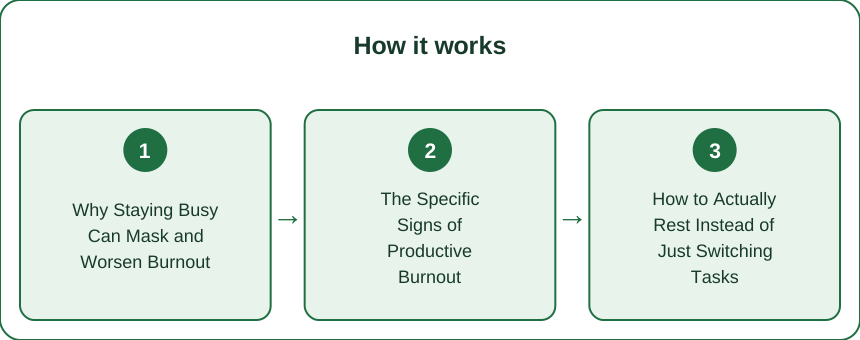
How to Actually Rest Instead of Just Switching Tasks
What real rest requires: the schedule-genuinely-unstructured-time-deliberately (the deliberately blocking time with no task assigned to it at all, since it won’t happen by default for someone in this pattern — the unstructured-time-has-to-be-scheduled-on-purpose), the the-tolerate-the-initial-discomfort-of-stopping (the expecting restlessness in the first several minutes of genuine rest and staying with it rather than immediately filling the space — the the-discomfort-passes-if-you-let-it), the the-choose-activities-with-no-output-metric (the picking rest activities that produce nothing measurable — no task completed, no goal met — specifically because they don’t feed the busyness pattern — the no-output-metric-is-the-point-not-a-flaw), the the-physical-stillness-not-just-mental-downtime (the actual physical rest — lying down, sitting without a screen — mattering distinctly from mental downtime spent scrolling, which is its own form of stimulation from the micro-recovery-workday logic — the scrolling-isn’t-rest-it’s-a-different-kind-of-input), the the-name-the-discomfort-if-it-helps (the simply acknowledging out loud or in writing that stopping feels uncomfortable, which can reduce the urge to immediately fill the space back up — the naming-the-feeling-reduces-its-grip), and the frame (the real-rest approach as scheduling unstructured time deliberately, tolerating initial discomfort rather than filling it, choosing no-metric activities, prioritizing physical stillness over scrolling, and naming the discomfort directly — actual recovery, not just a different flavor of busy).
Productive burnout hides behind constant activity because checking off tasks provides a quick dopamine hit that masks underlying exhaustion rather than resolving it, and being praised for high output reinforces the false assumption that staying busy means staying fine, right up until a threshold gets crossed. The telling signs are genuine discomfort with any unstructured time, high task output paired with no real sense of accomplishment, tiredness that doesn’t resolve with adequate sleep, irritability that surfaces specifically in small pauses, and a fading sense of personal preference outside of obligations. Actual recovery requires deliberately scheduling genuinely unstructured time, tolerating the initial discomfort of stopping rather than immediately filling it, choosing rest activities with no output metric attached, prioritizing physical stillness over scrolling, and naming the discomfort of stopping directly rather than letting it push you back into another task.
Keep Reading
This article is for general informational purposes only and is not medical advice. Always consult a qualified health professional for guidance specific to you.