Burnout Recovery for Women: The Comeback Guide Nobody Gives You
Burnout has been trivialized into a candle-purchasing opportunity, so let us restore its actual weight: the WHO defines it as an occupational syndrome — exhaustion, cynicism, and reduced efficacy from chronically unmanaged stress — and women, running careers plus disproportionate invisible labor, report it at higher rates. A bath does not fix it because a bath does not change the math that caused it. Recovery is real and reachable; it just works in stages, not weekends. Here is the honest map. (Supportive information — a doctor or therapist is the right co-pilot, especially if hopelessness has entered the chat.)

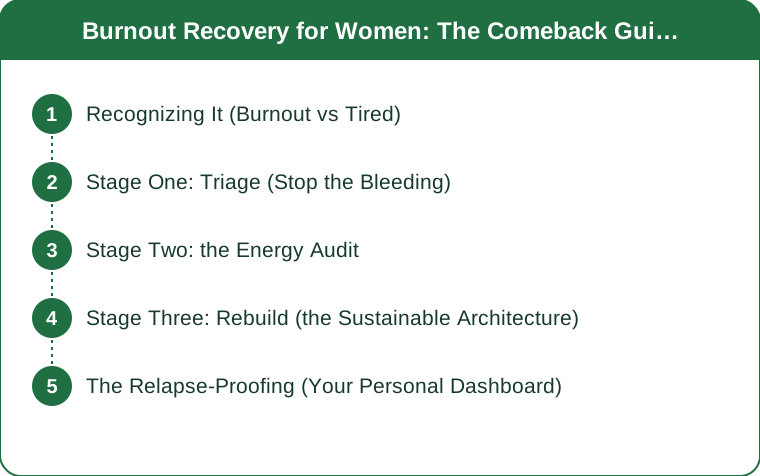
Recognizing It (Burnout vs Tired)
Tired is repaired by a good week of sleep; burnout laughs at your vacation. The three diagnostic flavors: exhaustion that rest does not touch (mornings feeling like debt before the day starts), cynicism and detachment (dreading work you used to like; going flat and numb about things that mattered), and eroded competence (simple tasks feeling enormous, focus scattering, everything taking triple time). Add the body’s memos — headaches, gut trouble, getting sick constantly, sleep that will not come despite exhaustion — and you have the full syndrome. Naming it precisely matters: you cannot recover from something you keep calling laziness.
Stage One: Triage (Stop the Bleeding)
Recovery begins with subtraction, not addition — no new wellness routines yet; first, lower the load: identify the two or three biggest energy hemorrhages and stanch what you can (the optional committee, the standing obligation run on guilt, the 11pm email habit), say the sentence I am at capacity out loud to at least one stakeholder, and take real time off if it exists to take — with the crucial knowledge that a week away treats symptoms, not causes, so its job is to buy stabilization, not to be the cure. Triage also means basics-only standards: fed, hydrated, in bed on time. Survival mode, dignified.

Stage Two: the Energy Audit
Once breathing, run the accounting: for one week, note what drains and what genuinely restores — not what should restore you, what does (the walk yes, perhaps the fancy meditation app no; certain people yes, certain people absolutely not). Two audit truths surface for most women: a shocking share of drain is not the work itself but the invisible logistics around it (the remembering, coordinating, anticipating), and real restoration is usually low-fi — movement, nature, sleep, unstructured time, one honest conversation. The audit converts recovery from vague self-care into a targeted reallocation: cut the top drains, schedule the true restorers like appointments.
Stage Three: Rebuild (the Sustainable Architecture)
With energy returning, resist the trap of sprinting back to the exact life that broke you. Rebuild with load-bearing changes: boundaries with teeth (hours that end, notifications that sleep, requests that meet a pause instead of a reflex-yes), movement as non-negotiable infrastructure (the most evidence-backed antidepressant-adjacent habit available), delegation and the radical practice of letting standards drop where stakes are low, and — the hard one — renegotiating the structural sources: the role, the workload, sometimes the job. Burnout is information about a system. Recovery that ignores the system is scheduled to repeat.
The Relapse-Proofing (Your Personal Dashboard)
Burnout survivors get one gift: they now know their early warning lights — the sleep slipping first, the cynical inner narration, the canceled walks, the third consecutive week of running on adrenaline. Write yours down while memory is fresh; that list is your dashboard. Install review rituals (a weekly fifteen-minute check: what drained, what restored, what needs to bounce?), keep one restorer sacred even in busy seasons — especially in busy seasons — and hold the core lesson: capacity is real, finite and non-shameful. The goal was never to become someone who never burns. It is to become someone who notices the smoke.
Burnout recovery, honestly: name it, triage the load, audit the energy, rebuild the architecture, and keep the dashboard lit. It is slower than the bubble-bath industrial complex promises and far more permanent. If you recognized yourself in stage one, start tonight with subtraction — one obligation, declined. That is not weakness or failure. That is the first data point of the comeback, and comebacks are built entirely out of those.
Keep Reading
This article is for general informational purposes only and is not medical advice. Always consult a qualified health professional for guidance specific to you.