Why a Vacation Doesn't Actually Fix Burnout (and What Does)
Quick Answer: A vacation reduces acute stress temporarily but doesn’t address the underlying causes of burnout — usually chronic overwork, lack of control, or misaligned values — so the exhaustion returns once you’re back in the same conditions. Real recovery requires changing something structural, not just resting.
You took the week off. You genuinely relaxed. And within days of being back, that same heavy, depleted feeling crept right back in. That’s one of the most common and most misunderstood patterns in burnout — and it’s not evidence that you ‘just need a longer vacation.’

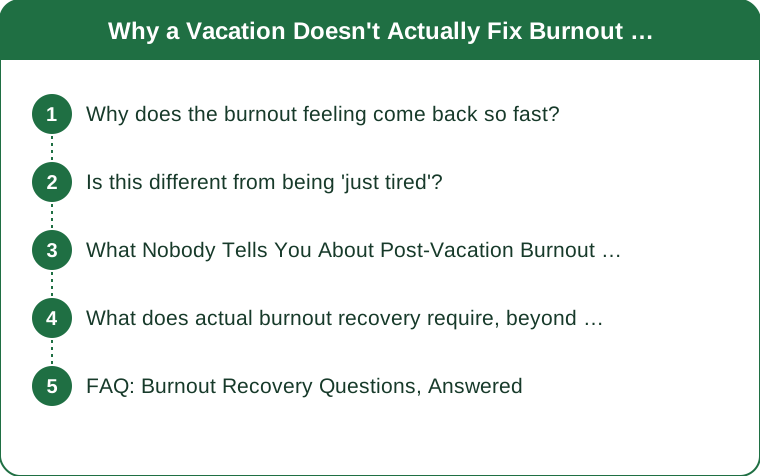
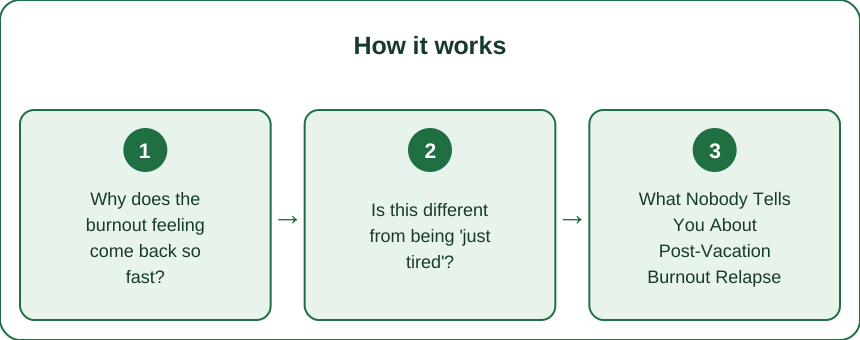
Why does the burnout feeling come back so fast?
Because a vacation removes you from the stressor, but it doesn’t remove the stressor itself. Burnout research (notably from psychologist Christina Maslach) identifies chronic causes — workload, lack of control, insufficient reward, breakdown of community, unfairness, and values mismatch — none of which are solved by a week away.
When you return to the exact same workload, same lack of autonomy, and same conditions that caused burnout in the first place, your nervous system reads the environment as unchanged — and the exhaustion response follows quickly, sometimes within days.
Is this different from being ‘just tired’?
Yes, and the distinction matters for what actually helps. Ordinary tiredness responds well to rest — a good weekend genuinely refills the tank. Burnout is a chronic stress response involving emotional exhaustion, cynicism/detachment, and reduced sense of effectiveness — three specific dimensions that don’t resolve with sleep or time off alone, because the cause isn’t a rest deficit.
A useful check: if you feel restored after 2-3 days off but tired people generally feel restored after a full week away, and you don’t — that gap points toward burnout rather than simple fatigue.

What Nobody Tells You About Post-Vacation Burnout Relapse
Here’s the part rarely said out loud: the return-to-work moment itself is often more predictive of relapse than the vacation’s length. A 2-week trip and a 1-week trip show similar relapse speed if you’re walking back into an unchanged inbox, unchanged expectations, and zero structural adjustment.
What actually extends the benefit: making one concrete change before or immediately after returning — a boundary, a delegated task, a renegotiated deadline — so you’re not stepping back into an identical situation. Even a small structural change measurably slows the relapse compared to rest alone.
What does actual burnout recovery require, beyond rest?
Research and clinical guidance point to changes across a few real levers, not just downtime:
- Workload: something has to actually decrease — delegation, deprioritization, or a hard conversation about capacity
- Control: more say in how, when, or where the work happens, even in small ways
- Boundaries that stick: specific, communicated limits (not just internal intentions) — see [[boundaries-that-stick]] type scripts for how to phrase these
- Community and support: repairing or building connection at work, since isolation compounds burnout significantly
- Values alignment: at least periodically reconnecting the work to something that still feels meaningful
FAQ: Burnout Recovery Questions, Answered
Does a longer vacation help more than a short one?
Somewhat, for acute stress reduction, but the relapse speed is driven more by what you return to than how long you were gone — a 3-day trip with a structural change afterward can outlast a 2-week trip with zero changes.
Is it normal to feel worse right before a vacation, then crash after?
Yes — anticipation can mask symptoms temporarily, and the crash afterward is common as that adrenaline drops and the same conditions reassert themselves.
When does burnout need professional support rather than lifestyle changes?
If exhaustion, cynicism, or reduced functioning are persistent, worsening, or affecting basic daily functioning, that’s worth a conversation with a doctor or therapist — burnout can overlap with or contribute to clinical depression and deserves that level of attention when it’s severe.
TL;DR:
- Vacations relieve acute stress but don’t touch burnout’s root causes — workload, control, community, values
- What you return to predicts relapse speed more than how long you were away
- One concrete structural change (delegation, boundary, renegotiated deadline) meaningfully slows relapse
- Persistent or worsening symptoms deserve professional support, not just another vacation
This is general information, not medical advice — if burnout is severe or lasting, a doctor or therapist is the right next step beyond any lifestyle change.
Keep Reading
This article is for general informational purposes only and is not medical advice. Always consult a qualified health professional for guidance specific to you.