Why a Vacation Doesn't Actually Fix Burnout (And What Would)
The advice to ‘just take a vacation’ when burnout hits is well-meaning and, for genuine burnout, usually doesn’t work the way people expect — the relief feels real for a few days and then evaporates almost the moment work resumes. This isn’t a sign the vacation was done wrong. It’s a sign burnout needs a different kind of fix entirely. Here is why time off alone often fails, and what actually addresses the underlying problem.

Why Time Off Alone Often Fails to Resolve Real Burnout
The structural mismatch: the burnout-is-caused-by-the-return-conditions-not-just-accumulated-fatigue (the actual sources of burnout — workload, lack of control, misaligned values, per the burnout-vs-just-tired-guide distinction — remaining completely unchanged and waiting on the other side of any vacation — the the-cause-is-still-there-when-you-get-back), the the-anticipatory-dread-of-returning-undercuts-the-rest-itself (the knowing a return to the same conditions is coming often measurably reducing how restorative the time off actually feels, even mid-vacation — the dread-of-the-return-contaminates-the-present-relief), the the-inbox-and-workload-pile-up-during-absence (the accumulated backlog waiting on return sometimes creating a harder landing than if no break had been taken at all, ironically making the immediate post-vacation period feel worse — the the-backlog-effect-can-cancel-out-the-recovery), the the-physiological-recovery-and-structural-recovery-are-different-things (the body and nervous system genuinely benefiting from rest, per the how-to-prevent-burnout-before-it-starts-guide logic, while the structural job or life conditions causing burnout remain a completely separate, unaddressed problem — the two-different-recovery-needs-only-one-gets-addressed), the the-a-short-break-doesnt-allow-time-for-actual-reflection-or-change (the a one- or two-week vacation being too brief a window to realistically reassess and change the underlying conditions, even with the best intentions — the not-enough-time-to-solve-a-structural-problem-during-a-short-break), and the reframe (the vacation’s failure to fix burnout as the predictable result of treating a structural problem with a temporary, non-structural solution — not evidence the person didn’t rest properly or didn’t deserve the time off).

How Fast the Relief Actually Fades Once Work Resumes
The predictable timeline: the the-first-day-back-often-erases-most-of-the-gains-by-itself (the sheer volume of catch-up on day one alone frequently spiking stress back to a pre-vacation baseline within hours, per the sunday-night-dread-and-what-it-signals-guide logic — the a-single-catch-up-day-can-undo-most-of-a-weeks-worth-of-rest), the the-physiological-markers-of-relaxation-reverse-faster-than-people-expect (the measurable markers of relaxed physiology, when studied, often reverting toward baseline within days of returning to a stressful routine rather than persisting for weeks — the the-bodys-relaxed-state-doesnt-linger-once-the-stressor-returns), the the-the-fading-feels-like-personal-failure-when-its-actually-structural (the noticing the calm disappear so quickly often getting misread as ‘I didn’t rest well enough’ rather than correctly identified as the structural conditions simply reasserting themselves immediately — the fast-fading-gets-blamed-on-the-person-instead-of-the-unchanged-conditions), the the-repeating-the-same-vacation-pattern-without-addressing-the-cause-produces-diminishing-returns-over-time (the cycle of burnout followed by a vacation followed by renewed burnout often producing progressively less relief with each repetition when the underlying structural cause is never addressed — the the-same-fix-applied-repeatedly-to-an-unaddressed-cause-works-less-well-each-time), and the frame (the fading timeline as fast, predictable, and structurally caused rather than a personal failure to rest properly — useful context before assuming the vacation itself was somehow done wrong).
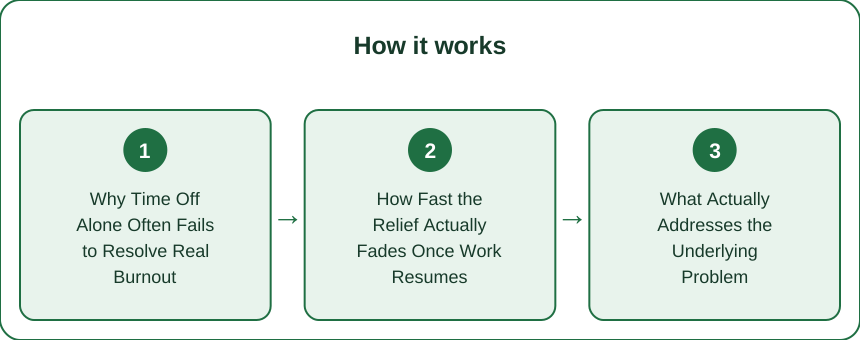
What Actually Addresses the Underlying Problem
The structural fixes: the identify-the-specific-structural-source-not-just-the-symptom (the pinpointing whether the actual driver is workload volume, lack of autonomy, value misalignment, or something else specific, rather than treating ‘burnout’ as one undifferentiated problem — the diagnose-the-specific-cause-before-choosing-a-fix), the the-negotiate-a-real-change-to-the-condition-not-just-the-schedule (the addressing workload, role scope, or working conditions directly with a manager or through a structural change, rather than only adjusting personal habits around an unchanged workload — the change-the-condition-not-just-your-coping-strategy-around-it), the the-boundary-setting-that-persists-after-the-honeymoon-period (the establishing boundaries — around hours, availability, scope — that are actually maintained past the first week back, since most people successfully set a boundary briefly and then let it erode, per the boundaries-that-stick logic — the the-boundary-has-to-survive-past-week-one), the the-micro-recovery-built-into-the-regular-week-not-just-annual-vacation (the small, regular recovery practices woven into the actual working week, per the micro-recovery-workday logic, mattering more for sustained prevention than a single annual trip — the regular-small-recovery-beats-one-big-annual-reset), the the-a-genuine-role-or-job-change-when-the-structural-mismatch-is-severe-enough (the acknowledging that some burnout situations genuinely require a role or job change, not just internal adjustment, when the structural mismatch is severe and unaddressable within the current role — the sometimes-the-honest-fix-is-leaving-not-adjusting), and the frame (the actual fix as diagnosing the specific structural cause, negotiating a real change to the condition itself, setting boundaries built to persist past the first week, weaving in regular micro-recovery rather than relying on one annual reset, and being honest about when a role change is the genuinely appropriate answer — vacation can be part of a recovery plan, but it was never designed to be the whole plan).
Time off alone often fails to resolve genuine burnout because the actual structural causes — workload, lack of control, misaligned values — remain completely unchanged on the other side of the vacation, the accumulated backlog waiting on return can create a harder landing than if no break had been taken, and even the anticipatory dread of returning to unchanged conditions measurably reduces how restorative the trip itself feels. Physiological rest and structural recovery are genuinely different needs, and a vacation only ever addresses the first one. The actual fix starts with diagnosing the specific structural source rather than treating burnout as one undifferentiated problem, negotiating a real change to the underlying condition rather than only adjusting personal coping habits around an unchanged workload, setting boundaries built to actually persist past the first week back rather than eroding quickly, weaving small regular recovery practices into the ongoing week rather than relying on one annual reset, and being honest about the situations where the structural mismatch is severe enough that a genuine role or job change is the appropriate answer. A vacation can be part of a real recovery plan — it was never designed to be the whole plan.
Keep Reading
This article is for general informational purposes only and is not medical advice. Always consult a qualified health professional for guidance specific to you.