Sunday Scaries or Burnout: How to Tell Which One You're Actually Dealing With
A dread-filled Sunday evening feels similar whether it’s ordinary work anxiety or a genuine warning sign of burnout, but the two call for completely different responses, and mistaking one for the other usually means burnout gets missed until it’s much harder to recover from.

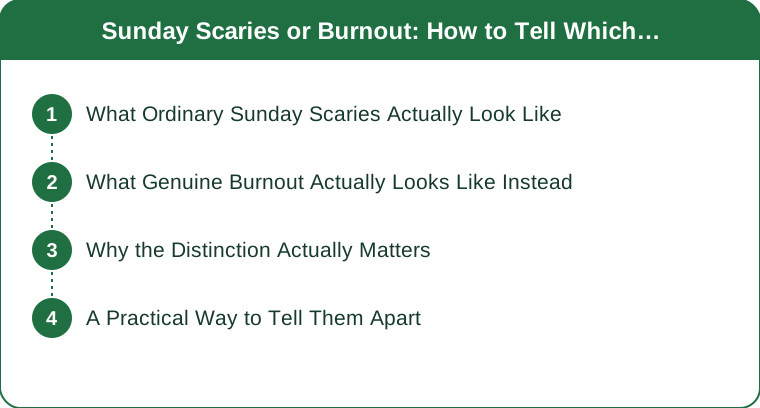
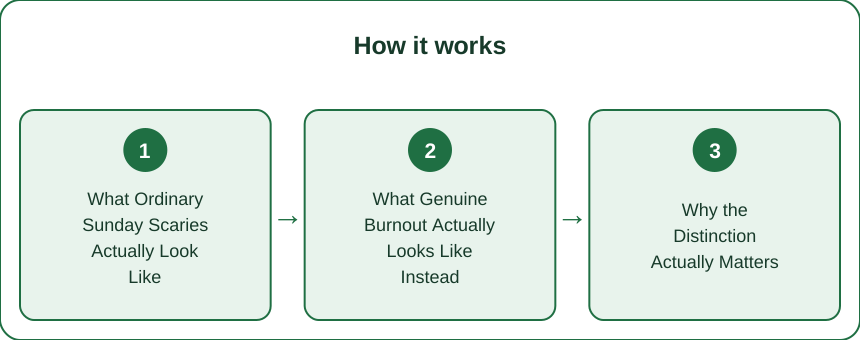
What Ordinary Sunday Scaries Actually Look Like
The typical pattern: the the-anticipatory-and-temporary-nature (Sunday scaries centering on anticipatory dread about a specific upcoming week or task, typically easing noticeably once Monday actually starts and the anticipated event is underway), the the-isolated-to-sunday-evening (the anxious feeling generally being isolated to Sunday evening specifically, without carrying the same intensity through the rest of the week), the the-resolves-with-normal-coping (ordinary Sunday scaries generally responding well to standard coping strategies like a relaxing evening routine or simply getting through the first hour of the work week)).
What Genuine Burnout Actually Looks Like Instead
The deeper pattern: the the-persists-throughout-the-week (burnout-related dread persisting well beyond Sunday evening, showing up as a baseline heaviness present most days rather than a feeling isolated to one evening), the the-physical-exhaustion-not-just-mental (burnout typically including genuine physical exhaustion, like waking up tired even after adequate sleep, in addition to the mental or emotional dread), the the-detachment-and-cynicism-signal (a growing sense of detachment or cynicism toward work itself, not just anxiety about specific tasks, being a hallmark burnout signal that ordinary Sunday scaries don’t typically include).

Why the Distinction Actually Matters
The consequences of misreading it: the the-normal-coping-doesnt-touch-burnout (standard Sunday-scaries coping strategies, like a calming evening routine, doing very little for genuine burnout since burnout isn’t rooted in anticipatory dread about one specific week), the the-burnout-worsens-without-structural-change (burnout generally continuing to worsen without some structural change, like reduced workload or role adjustment, rather than resolving through better weekend self-care alone), the the-early-misdiagnosis-delays-real-recovery (treating burnout like ordinary Sunday scaries for months delaying the point at which its actual underlying causes get addressed, often allowing it to progress further).
A Practical Way to Tell Them Apart
The self-check: the the-tuesday-and-wednesday-check (checking whether the dread and exhaustion are still present by Tuesday or Wednesday, since genuine burnout typically doesn’t fully lift once the week is underway the way Sunday scaries do), the the-physical-symptom-tracking (tracking physical symptoms like sleep quality and energy levels across a full week, since persistent physical exhaustion points more toward burnout than simple anticipatory anxiety), the the-multiple-week-pattern-check (checking whether this pattern has persisted across multiple consecutive weeks rather than being tied to one especially demanding week, since a multi-week pattern points more clearly toward burnout), and the frame (ordinary Sunday scaries are anticipatory, isolated to one evening, and ease with normal coping, while burnout is a persistent, physically exhausting pattern that continues past Monday and doesn’t resolve without an actual structural change — checking how the feeling holds up by midweek is the clearest way to tell which one is actually happening.)
A Sunday evening filled with dread can look identical whether it’s ordinary anticipatory anxiety about the coming week or an early sign of genuine burnout, but the two need completely different responses, and treating burnout like a bad case of Sunday scaries tends to delay real recovery rather than speed it up. Ordinary Sunday scaries are anticipatory and isolated to that one evening, easing noticeably once Monday actually starts, and they generally respond well to a relaxing evening routine or simply getting through the first hour of the work week. Genuine burnout looks different, the dread and heaviness persist well beyond Sunday, often showing up as a baseline exhaustion present most days of the week, accompanied by genuine physical tiredness even after adequate sleep and a growing sense of detachment or cynicism toward work itself rather than anxiety tied to one specific task. The clearest practical check is looking at how the feeling holds up by Tuesday or Wednesday, since burnout typically doesn’t lift once the week is underway the way ordinary Sunday scaries do, and checking whether the pattern has repeated across multiple consecutive weeks rather than one unusually demanding one, since burnout generally continues to worsen without an actual structural change like reduced workload rather than resolving through better weekend self-care alone.
Keep Reading
This article is for general informational purposes only and is not medical advice. Always consult a qualified health professional for guidance specific to you.