How to Recognize Your Own Burnout Before Anyone Else Notices It
Quick Answer: A drop in things that used to bring you satisfaction, increased cynicism about work that didn’t used to bother you, and physical symptoms like frequent headaches or disrupted sleep are three of the earliest, most self-detectable burnout signs — often noticeable weeks before exhaustion becomes undeniable.
Burnout has a reputation for showing up as sudden collapse, but there’s usually a longer, quieter runway beforehand — one that’s genuinely possible to notice in yourself if you know what to look for.

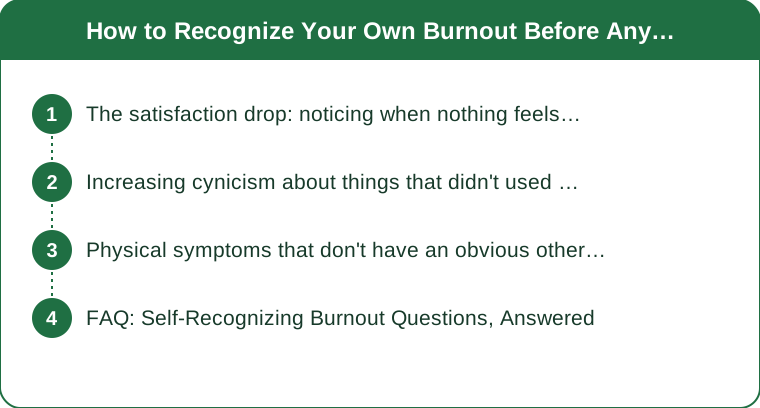
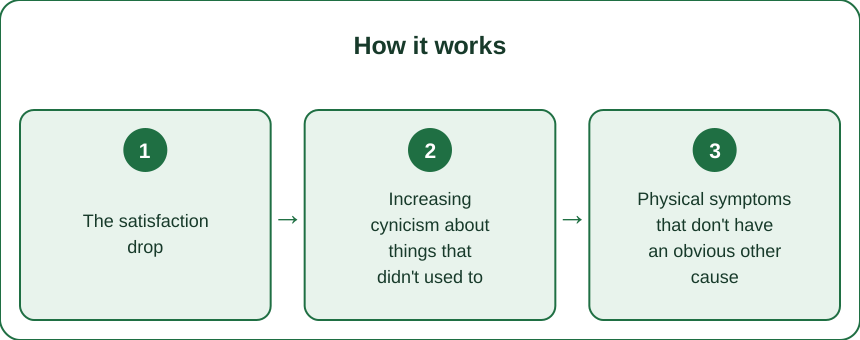
The satisfaction drop: noticing when nothing feels like enough
One of the earliest, most reliable signs is a shift where accomplishments and small wins stop registering as satisfying the way they used to — finishing a project or getting positive feedback feels flat rather than rewarding. This numbing effect often shows up well before exhaustion does, and it’s one of the most detectable signs if you actively check in with how accomplishments feel, not just how tired you are.
Increasing cynicism about things that didn’t used to bother you
A creeping sense of cynicism or detachment toward work, coworkers, or tasks that previously felt neutral or even engaging is a classic early burnout marker. This is different from having a bad day — it’s a sustained shift in baseline attitude that’s often easier for a partner or close friend to notice from the outside, but is detectable in yourself if you compare your current reactions to how you felt about the same situations six months ago.

Physical symptoms that don’t have an obvious other cause
Frequent headaches, disrupted sleep, or new digestive discomfort without another clear explanation often show up during the early stages of burnout, driven by sustained stress hormone elevation. These physical signals are sometimes the most objective, hardest-to-rationalize-away signs, since they don’t require the same kind of self-honesty that noticing an attitude shift does.
FAQ: Self-Recognizing Burnout Questions, Answered
How is early burnout different from just being tired after a hard week?
A hard week’s tiredness typically resolves with rest over a weekend; early burnout symptoms persist and often don’t improve much even after time off.
Is it possible to be in early burnout without job dissatisfaction?
Yes — burnout can develop even in a job you generally like, especially under sustained high demands or unclear boundaries, and doesn’t require actively disliking the work itself.
What’s the first practical step after recognizing early signs in yourself?
A smaller, sustained boundary change (reducing after-hours availability, protecting one recovery habit) tends to be more effective as a first step than a dramatic, unsustainable overhaul.
TL;DR:
- A drop in satisfaction from usual accomplishments is often one of the earliest detectable burnout signs
- Increasing cynicism toward previously neutral tasks or coworkers is a sustained shift, not a bad day
- Unexplained physical symptoms (headaches, sleep disruption) often show up during early burnout stages
- Small, sustained boundary changes are a more realistic first step than a dramatic overhaul
Compare how you feel about your usual wins and routines now versus six months ago — that comparison often reveals early burnout more clearly than checking how tired you feel today.
Keep Reading
This article is for general informational purposes only and is not medical advice. Always consult a qualified health professional for guidance specific to you.