The Burnout Symptom Everyone Mistakes for Laziness
Quick Answer: Task paralysis — the inability to start even simple, low-effort tasks despite wanting to complete them — is the burnout symptom most often misread as laziness, because from the outside (and often from the inside) it looks like a lack of motivation rather than a genuine cognitive symptom.
The person experiencing task paralysis usually wants to do the task and feels frustrated at their own inability to start, which is a meaningfully different internal experience than actual low motivation, even though the two can look identical from outside.

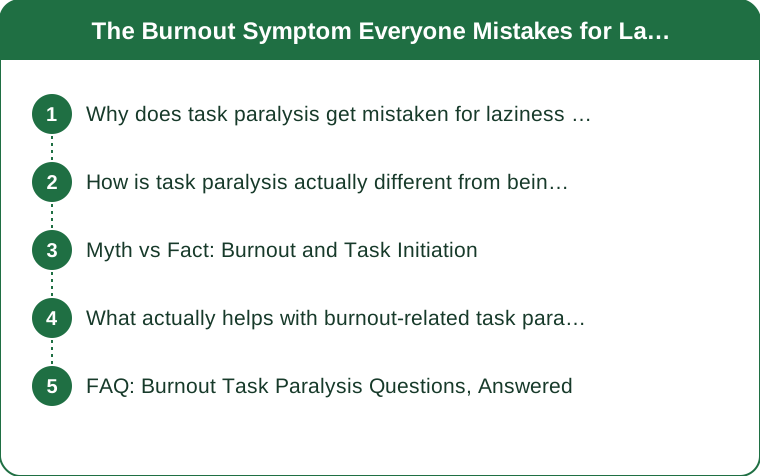
Why does task paralysis get mistaken for laziness so often?
From the outside, an unstarted simple task looks identical whether the cause is low motivation or genuine cognitive burnout, since the observable behavior — the task not getting done — is the same either way. Burnout affects executive function (the mental process of initiating and organizing tasks), and that’s an invisible, internal difference that behavior alone doesn’t reveal.
How is task paralysis actually different from being unmotivated?
Someone who’s simply unmotivated often doesn’t feel distress about not doing the task; someone experiencing burnout-related task paralysis frequently feels real frustration, guilt, or anxiety about their inability to start, precisely because they do want to do it. That internal distress is a key distinguishing marker, even though it’s not visible externally.

Myth vs Fact: Burnout and Task Initiation
Myth: if you cared enough, you’d just start the task. Fact: burnout genuinely impairs executive function at a neurological level — willpower alone often isn’t sufficient to override it, the same way willpower alone doesn’t fix a physical injury.
Myth: task paralysis means you’re not actually burned out, just unmotivated. Fact: task paralysis is one of the more commonly reported and researched burnout symptoms specifically.
What actually helps with burnout-related task paralysis?
Breaking a task down to an absurdly small first step (not “clean the kitchen” but “put one dish in the sink”) often works better than trying to push through the whole task, since it lowers the initiation barrier rather than requiring more willpower. Addressing the underlying burnout — rest, reduced load, support — matters more long-term than task-management tricks alone.
FAQ: Burnout Task Paralysis Questions, Answered
How is burnout task paralysis different from ADHD-related task initiation difficulty?
They can look similar and even overlap, but burnout-related paralysis typically develops alongside other burnout symptoms (exhaustion, cynicism) and tends to improve with rest and reduced load, unlike a chronic condition.
Should I push through task paralysis or wait until I feel ready?
Small-step approaches tend to work better than either forcing through or waiting indefinitely — waiting alone often doesn’t resolve it without addressing underlying burnout.
When does task paralysis warrant professional support?
If it’s persistent, affecting work or relationships significantly, or accompanied by other burnout or depression symptoms, a therapist can help distinguish the cause and guide treatment. This is general information, not medical advice.
TL;DR:
- Task paralysis looks like laziness from outside but is a genuine burnout symptom
- Internal frustration and guilt about not starting distinguishes it from true low motivation
- Willpower alone often isn’t enough to override burnout-related executive dysfunction
- Breaking tasks into absurdly small first steps helps more than pushing through. This is general information, not medical advice.
Keep Reading
This article is for general informational purposes only and is not medical advice. Always consult a qualified health professional for guidance specific to you.