How to Actually Recover From Burnout When Taking Time Off Isn't an Option
Quick Answer: When extended time off isn’t possible, burnout recovery has to happen in smaller, consistent doses built into the existing workday and week — daily micro-recovery breaks, protected non-negotiable boundaries, and one meaningfully restorative activity per week can meaningfully offset burnout even without a full break.
The standard burnout advice — take a vacation, take a leave of absence — assumes an option that isn’t available to everyone right now. That doesn’t mean recovery isn’t possible; it means the recovery has to look different.

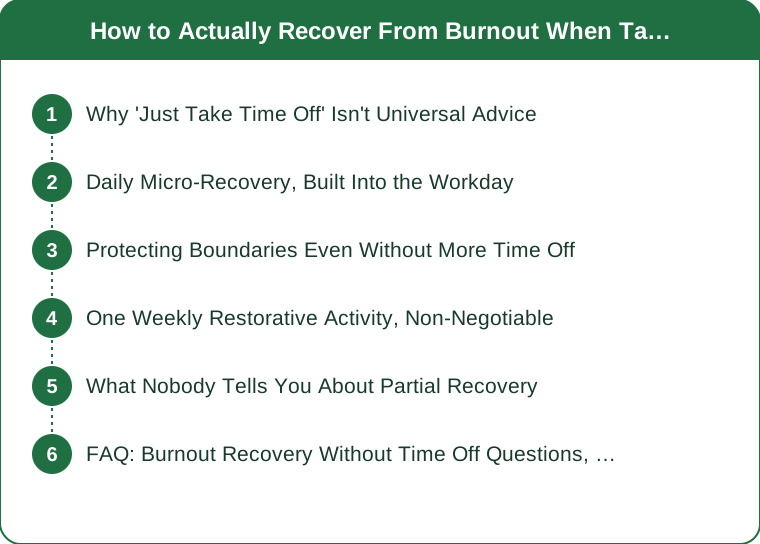
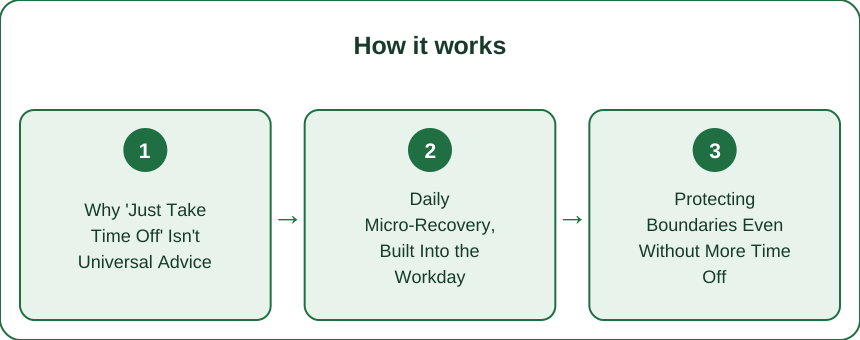
Why ‘Just Take Time Off’ Isn’t Universal Advice
Financial constraints, job security concerns, caregiving responsibilities, or simply not having leave available make ‘take a break’ impossible advice for a large number of people experiencing burnout — recovery strategies that assume this option exists leave a real gap for everyone else.
Daily Micro-Recovery, Built Into the Workday
Short, genuine breaks (5-10 minutes, away from screens, several times a day) accumulate meaningfully over a week even though no single break feels like much — the key is that these breaks need to be protected and actually taken, not just theoretically available.
Protecting Boundaries Even Without More Time Off
Setting one or two firm boundaries (not checking email after a specific hour, protecting one full weekend day from work tasks) doesn’t require additional time off — it requires holding a line within the time you already have, which is a different but achievable form of recovery.

One Weekly Restorative Activity, Non-Negotiable
Identifying one activity that reliably restores energy (not just distracts from stress) and protecting a consistent weekly slot for it — even 30-60 minutes — gives burnout recovery a recurring anchor point that doesn’t depend on a big block of free time.
What Nobody Tells You About Partial Recovery
Recovering from burnout without a full break won’t look like the dramatic ‘reset’ that a vacation promises — it looks like a gradual reduction in the most acute burnout symptoms over weeks, which can be harder to notice but is still genuine, meaningful progress.
FAQ: Burnout Recovery Without Time Off Questions, Answered
Is it possible to actually resolve burnout without ever taking time off?
Partial, sustained relief is achievable with consistent smaller interventions, though if burnout is severe, even a short amount of time off (a single day, a long weekend) can meaningfully help if it becomes possible later.
What if my workplace doesn’t respect any boundaries I try to set?
This is a sign the burnout may be more structural than personal — in these cases, it’s worth evaluating whether the role or workplace itself is sustainable long-term, ideally with support from a counselor or trusted mentor.
Should I talk to a doctor if burnout symptoms persist despite trying smaller recovery strategies?
Yes — persistent burnout symptoms, especially those affecting sleep, mood, or physical health, are worth discussing with a doctor or mental health professional rather than managing alone indefinitely.
TL;DR:
- Smaller, consistent recovery habits can meaningfully help even without extended time off
- Protected daily micro-breaks add up more than they seem to in the moment
- One firm boundary and one weekly restorative activity give recovery a recurring anchor
- Persistent burnout symptoms still deserve professional support, time off or not
This is general information, not medical advice — a doctor or mental health professional can help if burnout symptoms are severe or ongoing.
Keep Reading
This article is for general informational purposes only and is not medical advice. Always consult a qualified health professional for guidance specific to you.