When Burnout Symptoms Look Like Depression — and How to Tell the Difference
Quick Answer: Burnout symptoms tend to improve noticeably with rest, boundary changes, or time away from the specific stressor, while depression symptoms typically persist regardless of external circumstances — this responsiveness to context is one of the clearest distinguishing signs, though the two can and often do co-occur.
Burnout and depression share enough overlapping symptoms — exhaustion, low motivation, difficulty concentrating — that distinguishing them can feel genuinely confusing, but the distinction matters for figuring out what actually helps.

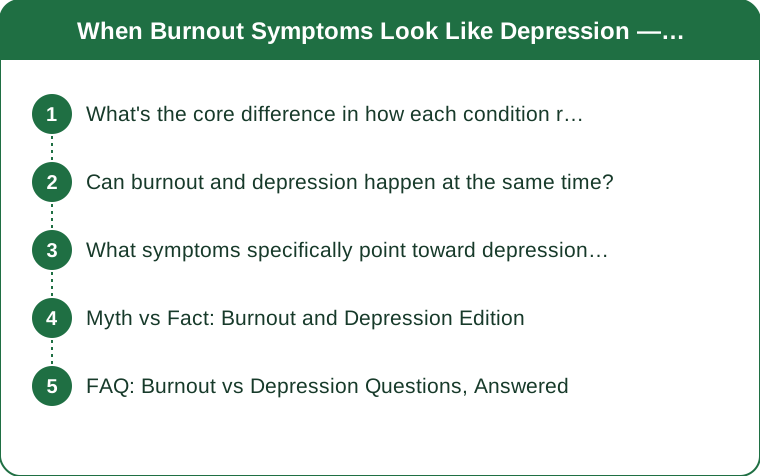
What’s the core difference in how each condition responds to context?
Burnout is fundamentally tied to a specific chronic stressor (often work), and symptoms characteristically ease, even if slowly, with rest, boundary-setting, or removal from that stressor. Depression tends to persist across contexts and doesn’t reliably lift just because the external stressor changes, which is a meaningful diagnostic distinction.
Can burnout and depression happen at the same time?
Yes, commonly — prolonged, unaddressed burnout is a recognized risk factor for developing clinical depression, meaning the two aren’t mutually exclusive and often co-occur, particularly when burnout goes unaddressed for an extended period.

What symptoms specifically point toward depression rather than burnout alone?
Persistent low mood or emptiness unrelated to work stress specifically, loss of interest in previously enjoyable non-work activities, and symptoms that don’t improve during vacations or time off are more characteristic of depression than burnout, which typically shows at least some relief during genuine breaks.
Myth vs Fact: Burnout and Depression Edition
Myth: If a vacation doesn’t fix it, it’s not burnout. Fact: a single vacation often isn’t enough even for pure burnout recovery, which can take weeks to months of sustained change — the distinguishing factor is trend over time, not a single break.
Myth: Burnout is just a milder version of depression. Fact: they’re distinct conditions with different primary causes and treatment approaches, even though they share overlapping symptoms.
FAQ: Burnout vs Depression Questions, Answered
Should I see a professional to figure out which one I’m dealing with?
Yes — a mental health professional can assess the distinction accurately, which self-assessment often can’t do reliably given the symptom overlap.
Does treating burnout help if it’s actually depression?
Addressing burnout factors (rest, boundaries) can help either way, but depression often needs additional treatment (therapy, sometimes medication) beyond stress reduction alone.
How long should I try burnout fixes before considering depression is involved?
If symptoms persist beyond several weeks of genuine rest and boundary changes without improvement, it’s worth discussing with a professional rather than continuing to assume it’s burnout alone. This is general information, not medical advice.
TL;DR:
- Burnout symptoms tend to ease with rest and boundary changes; depression tends to persist regardless
- The two conditions frequently co-occur, especially with prolonged unaddressed burnout
- Persistent low mood unrelated to work, or symptoms that don’t lift on vacation, point more toward depression
- A professional assessment is the most reliable way to distinguish the two
This is general information, not medical advice — but naming the distinction correctly matters, since the fixes that work for one don’t fully address the other.
Keep Reading
This article is for general informational purposes only and is not medical advice. Always consult a qualified health professional for guidance specific to you.